How to Measure a Room for Flooring (Step-by-Step Guide)
If you want to measure a room for flooring without overbuying or coming up short, the job is simpler than it looks. Measure the length and width of every section that will receive flooring, calculate the base square footage, and then add the right waste allowance before you order. This guide shows the full process in plain language so you can move from tape measure to shopping list without second-guessing the math.
The reason people search how to measure a room for flooring is usually not curiosity. They are getting ready to buy hardwood, tile, laminate, vinyl plank, or carpet right now. That means the important part is not only the formula. It is knowing what to include, how to handle closets and odd corners, and how much extra material to buy so standard cuts do not derail the install. A good measurement now saves money, avoids a second store trip, and makes installation day much less stressful.
What You'll Need Before You Start
You do not need a truck full of tools to measure a room for flooring well. A few basic items are enough, as long as you use them consistently and write every number down before moving to the next wall.
If you have ever tried to re-create a room from memory after walking out with a tape measure, you already know why this matters. The fastest way to make a costly mistake is to trust a half-finished sketch or a number you meant to write down later. A simple checklist keeps the measuring process calm and repeatable.
- Checklist
Tape measure (25 ft recommended)
Long enough for most bedrooms, living rooms, and open areas without stitching small measurements together.
- Checklist
Pencil and paper (or phone notepad)
You need a clean place to record each wall length before the numbers start to blur together.
- Checklist
Calculator (or use ours below)
Helpful for quick square-footage math and even more useful once you add waste and multiple rooms.
- Checklist
Floor plan sketch (optional but helpful)
A rough drawing makes it much easier to mark closets, alcoves, and L-shaped sections correctly.
Step-by-Step: How to Measure a Room for Flooring
The five-step process below is the core answer for people asking how to measure a room for flooring. It works for single rooms, open spaces, and multi-room projects as long as you keep each measurement tied to the right part of the layout.
The key is to finish each room in one pass. Measure it, label it, calculate it, and note the waste factor before moving on. That approach prevents one of the most common DIY errors: mixing one room's width with another room's length after a long afternoon of measuring.
- 1
Clear the Room (or Note Obstacles)
Move small furniture if you can, or at least note fixed obstacles and layout breaks before measuring. A clear floor line helps you measure a room for flooring more accurately because you can see where closets, bump-outs, and short return walls actually start and stop.
- 2
Measure Length and Width
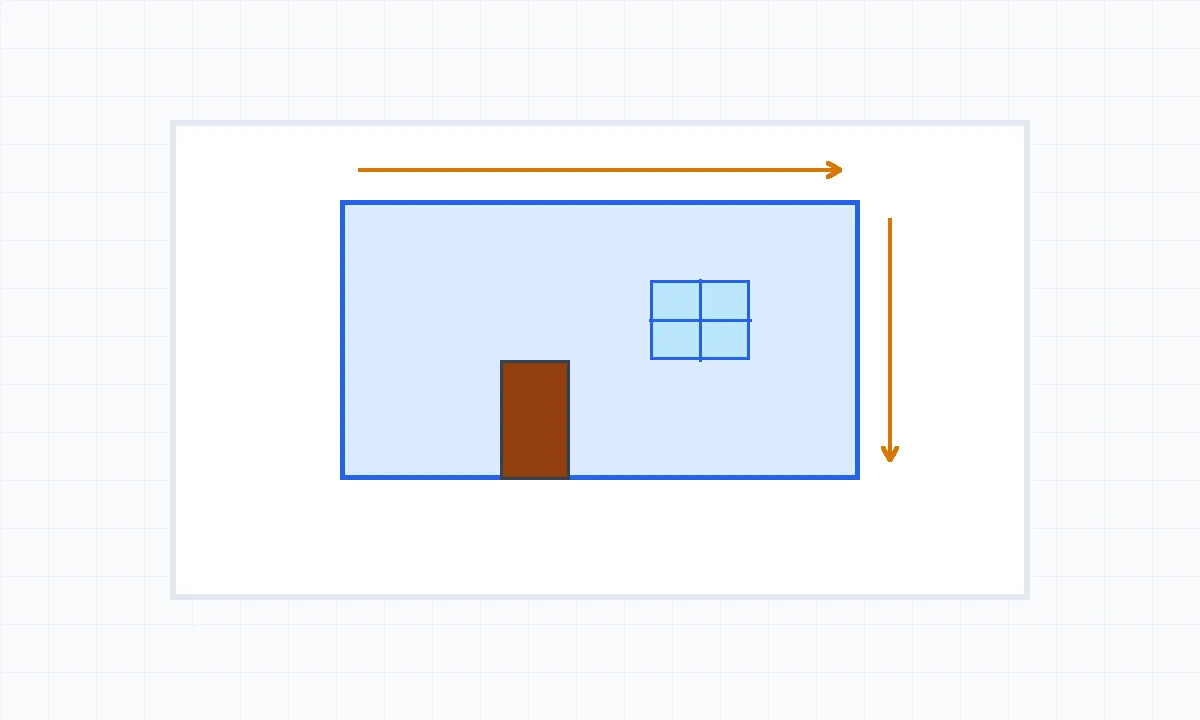
Measure the longest side first, then the perpendicular width. Go wall to wall at floor level, include closets and recessed sections that will receive flooring, and measure twice if the room is important enough to affect your material order.
- 3
Calculate Square Footage
Use the core formula length × width = square footage. A room that measures 12 ft × 15 ft = 180 sq ft, which gives you the base area before waste, transitions, or multi-room totals are added. If you want a broader refresher on the formulas, read our how to calculate square footage guide, or jump straight into the flooring calculator.
Inline CTAAlready have your measurements? Use our free flooring calculator to instantly estimate how much material you need, including waste.
Open Flooring Calculator - 4
Account for Waste and Overage
Most straight flooring layouts use about 10 percent extra for cuts and fitting, while diagonal layouts, patterned material, and tricky rooms often need 15 percent or more. The most useful shopping formula is total needed = square footage × 1.10. For example, 180 × 1.10 = 198 sq ft, which means you would normally round up and buy 200 sq ft.
- 5
Add Up All Rooms (If Doing Multiple Rooms)
Measure each room separately, then total the finished numbers at the end. Do not forget closets, small hallways, and transition zones, because those areas are easy to miss and still consume real material.
How to Measure Irregular or L-Shaped Rooms
The "Divide and Conquer" Method
When a room is not a perfect rectangle, do not force one long guessed measurement across the whole space. Instead, divide the room into two or more smaller rectangles, measure each one cleanly, and then add the areas together. This is the safest way to measure a room for flooring when a dining nook, hall return, or built-in extension changes the footprint.
The reason this method works so well is that flooring is ordered by total area, not by how elegant your sketch looks. Two clear rectangles are easier to verify than one messy measurement that hides a missing section.
This same approach works for breakfast nooks, bay-window bumps, closet offsets, and rooms that open into short hall returns. If a section will receive flooring, break it into a simple shape, measure it on its own, and add it into the total instead of guessing across empty air.
Example: Measuring an L-Shaped Room
Imagine one main rectangle that measures 10 ft × 12 ft and a second leg that measures 8 ft × 6 ft. Rectangle A is 120 sq ft. Rectangle B is 48 sq ft. Add them together and the total flooring area is 168 sq ft.
Once you have the base area, you still apply the waste factor the same way. For a standard layout, 168 × 1.10 = 184.8 sq ft, so you would usually plan to buy about 185 to 190 sq ft.
┌────────────┐
│     A      │
│   10×12    ├──────┐
│            │  B   │
└────────────┤ 8×6  │
             └──────┘

Area = (10×12) + (8×6)
     = 120 + 48
     = 168 sq ft
This is the simplest irregular-room workflow to teach, check, and repeat across kitchens, open living rooms, and bonus spaces with short side legs.
Flooring Waste Factor Guide
Flooring orders almost always need more material than the exact room area. Boards and tiles have to be cut at walls, trimmed around door frames, and matched through transitions. Some material also gets lost to damaged pieces, layout balancing, and pattern alignment. That is why the waste factor belongs in the measuring process, not only at checkout.
It also helps to think about how flooring is packaged. Many products are sold by the carton, not as a perfectly exact square-foot amount, so your final order usually gets rounded up to the next full box. If your math lands close to a threshold, the waste factor gives you breathing room instead of leaving you one plank or one tile short near the end of the job.
| Flooring Type | Recommended Waste Factor | Why |
|---|---|---|
| Hardwood (straight lay) | 10% | Standard cuts and fitting. |
| Hardwood (diagonal lay) | 15% | More angled cuts and layout loss. |
| Laminate | 10% | Standard cuts along walls and doorways. |
| Tile (straight lay) | 10% | Edge cuts and a small breakage buffer. |
| Tile (diagonal lay) | 15% | More waste at corners and edges. |
| Carpet | 10–15% | Pattern matching, seams, and trimming. |
| Vinyl plank (LVP) | 10% | Standard cuts with a manageable install pattern. |
| Engineered hardwood | 10% | Typical trimming and fitting allowance. |
If your project turns into carpet planning or tile layout, you can also open the carpet calculator or the tile calculator. The material changes, but the principle stays the same: measure clearly, then order with a realistic buffer.
Already have your measurements?
Use our free flooring calculator to instantly estimate how much material you need, including waste. It is the fastest next step once your room measurements are written down and checked.
Open Flooring CalculatorFrequently Asked Questions
How do I measure a room for flooring?1
Measure the room length and width in feet, multiply the two numbers to get the square footage, and then add a waste allowance before buying material. In most rooms, the short version is length × width = area, then area × 1.10 for a standard flooring order.
How much extra flooring should I buy?2
A straight flooring layout usually uses about 10 percent extra. Diagonal layouts, complex patterns, and awkward rooms often need 15 percent, while especially tricky jobs can climb into the 15 to 20 percent range.
How do I measure an L-shaped room for flooring?3
Split the room into two rectangles, measure each section separately, calculate each area, and then add the totals together. This divide-and-conquer method is the safest way to measure a room for flooring when one rectangle would hide part of the layout.
Do I measure flooring in square feet or square yards?4
Hardwood, laminate, vinyl plank, and tile are usually measured and sold in square feet. Carpet is the main exception, because it is still often quoted in square yards, so if you need that conversion, use our square feet to square yards page.
Should I include closets when measuring for flooring?5
Yes. If the closet will receive the same flooring, include it in the measurement. Closets are easy to skip on a quick sketch, but they still affect the final order quantity.
What if my room is not a perfect rectangle?6
Break the room into simple shapes such as rectangles, measure each one separately, and add the areas together at the end. That method works for L-shaped rooms, dining nooks, bay-window bumps, and other irregular layouts.