How Much Flooring Do I Need? (The Complete Buying Guide)
The short answer is simple: measure the floor, add the right waste factor, then round up to the nearest box or bundle. The better answer is this full buying path: measure the room, calculate square footage, choose a material, adjust for waste, convert the result into boxes, and estimate total cost before you walk into the store.
This guide is for the moment when you are close to buying. You may already know the room dimensions, but you still need to avoid the expensive mistakes: ordering exactly the measured area, forgetting closets, mixing product lots, skipping underlayment, or choosing a pattern that needs more waste than expected.
The Quick Answer: A 3-Step Formula
To calculate how much flooring you need, measure the room area, add waste, and round up to the package size. For most straight installations, a 10% waste factor is the right starting point.
Measure your room
length x width = square footage
Add waste factor
sq ft x 1.10 for most materials
Round up
buy the nearest full box or bundle
12 ft x 15 ft = 180 sq ft
180 x 1.10 = 198 sq ft
Round up to 200 sq ft -> order 200 sq ft of flooring
Step 1 — Measure Your Room
Start by measuring every floor area that will receive the new material. This step matters because every later number, including waste, box count, and cost, is built on the base square footage.
Standard Rectangular Rooms
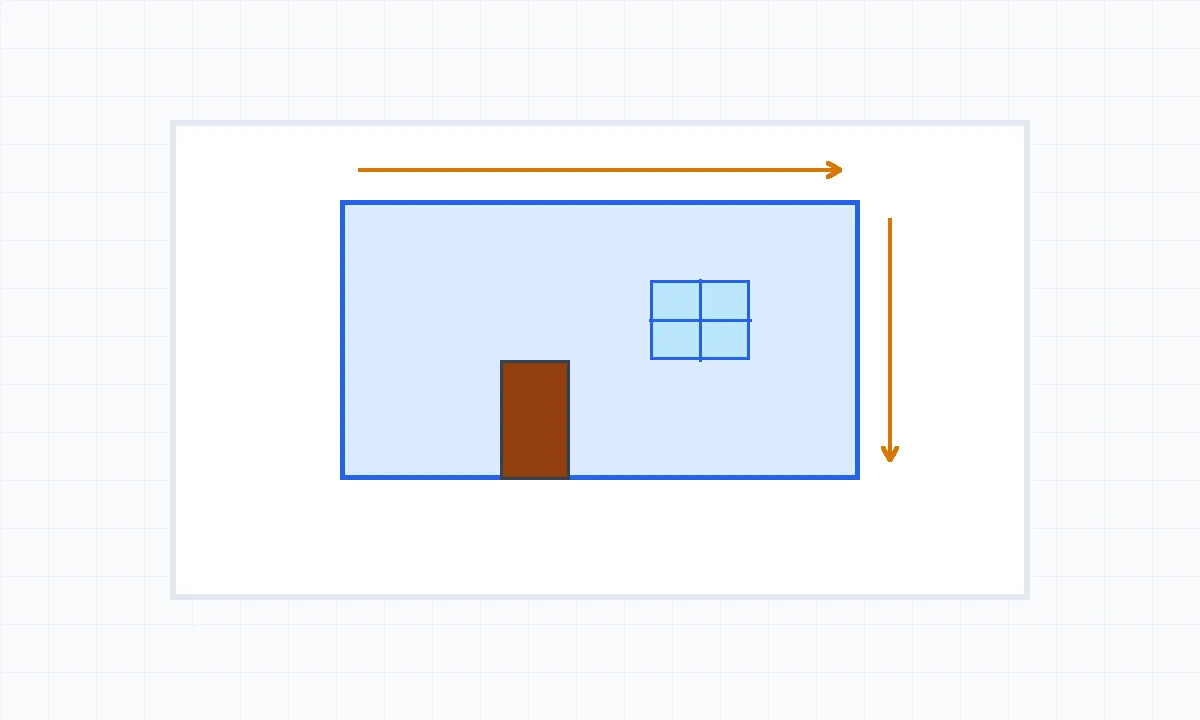
Measure along the longest wall first, then measure the width at a right angle. Use a tape measure at floor level and record dimensions to the nearest 1/4 inch when possible. Measure twice and keep the larger number if the walls are not perfectly parallel.
L-Shaped and Irregular Rooms
Split the room into rectangles, calculate each section, then add the totals. For an L-shaped room, (10 x 12) + (8 x 6) = 120 + 48 = 168 sq ft. After that, apply the waste factor to 168 sq ft, not to only the main rectangle.
Rooms with Alcoves, Closets, and Bay Windows
Include closets if the flooring continues inside. Measure bay windows and alcoves as small rectangles and add them to the room total. Measure to the wall line behind the baseboard, not only to the visible edge of the old floor, and include doorway transition areas.
For a deeper measurement walkthrough, use how to measure a room for flooring.
L-Shaped Room Sketch
Pro tip: write dimensions on a sketch or phone note while you stand in the room. Do not rely on memory after measuring three rooms, two closets, and a hallway.
Step 2 — Calculate Your Square Footage
Once the measurements are written down, convert the shape into square footage. Rectangles use length x width; irregular rooms use smaller rectangles added together. If you already have the dimensions, open the flooring calculator to verify the math before you choose a product.
Use the calculator on this pageStep 3 — Add the Right Waste Factor for Your Material
Waste factor is where many flooring orders go wrong. Ten percent is a good baseline for straight plank or tile layouts, but material type and pattern can move the right number higher. Hardwood needs room for board selection and grain matching; porcelain tile can break during cuts; carpet depends on seam and roll planning; herringbone creates many short angled cuts.
Use the table as a buying guide, then adjust for your actual room. If you are between two numbers, buy the extra 5% instead of gambling on a perfect install. Reordering later can mean a different dye lot, color shift, delayed installer, or a repair stash that never matches.
| Flooring Type | Straight Lay | Diagonal (45 deg) | Herringbone | Notes |
|---|---|---|---|---|
| Hardwood | 10% | 15% | 15-20% | Grain matching adds waste |
| Engineered Hardwood | 10% | 15% | 15% | Check veneer and finish lot |
| Laminate | 10% | 15% | 15% | Easy cuts, but lock damage happens |
| LVP / LVT | 10% | 15% | 15% | Most forgiving to cut |
| Ceramic Tile | 10% | 15% | 15-20% | Add 5% for complex patterns |
| Porcelain Tile | 10% | 15% | 15-20% | Harder to cut, more breakage |
| Carpet | 10-15% | N/A | N/A | Seam placement affects waste |
| Cork | 10% | 12% | N/A | Soft edges need clean handling |
| Bamboo | 10% | 15% | N/A | Acclimation matters |
Extra Waste Scenarios
These conditions stack on top of your normal waste factor. A first-time DIY herringbone tile job in an old bathroom is not the same risk as straight LVP in a square bedroom.
Room has many corners, alcoves, or protrusions
Large-format tile over 24" x 24"
Pattern matching or directional design
Older renovation with uneven subfloor
First DIY installation
Step 4 — Calculate Your Final Order Quantity
This is where square footage becomes a purchase quantity. Do not stop at the waste-adjusted square footage; divide by the coverage per box and round up to whole boxes because stores do not sell 0.9 of a carton.
Order Formula
Final order = (room sq ft x waste factor) ÷ coverage per box
Then round up to the next whole box
Example: a 12 x 15 room is 180 sq ft. For LVP in a straight lay, use 10% waste: 180 x 1.10 = 198 sq ft. If each box covers 20 sq ft, 198 ÷ 20 = 9.9 boxes, so buy 10 boxes.
- Buy one extra box for future repairs when the budget allows.
- Check lot numbers so all boxes come from the same production batch.
- Inspect boxes before opening and handle visible damage before installation day.
Step 5 — Estimate Your Total Cost
Cost estimates should separate material from labor. The table below uses common planning ranges, but local installer rates, subfloor prep, stairs, removal, underlayment, trim, delivery, and disposal can move the final project price.
| Flooring Type | Material Cost | Installation Cost | Total Range |
|---|---|---|---|
| LVP / LVT | $2-$7/sq ft | $1-$3/sq ft | $3-$10/sq ft |
| Laminate | $1-$5/sq ft | $1-$3/sq ft | $2-$8/sq ft |
| Hardwood | $5-$15/sq ft | $3-$8/sq ft | $8-$23/sq ft |
| Engineered Hardwood | $4-$12/sq ft | $2-$6/sq ft | $6-$18/sq ft |
| Ceramic Tile | $1-$10/sq ft | $4-$10/sq ft | $5-$20/sq ft |
| Carpet | $1-$5/sq ft | $0.50-$2/sq ft | $1.50-$7/sq ft |
Prices vary by region, brand, and installer. Get at least 3 quotes before committing to a project. Use our Flooring Calculator to estimate your total project cost with your own square footage and price per sq ft.
Planning ranges are cross-checked against current published cost guides from Angi and HomeAdvisor.
Flooring Calculator: Get Your Number in Seconds
Use this embedded calculator when you want the number without switching pages. It is best for checking room shape, square footage, waste percentage, and rough material cost after you understand the buying logic above.
Flooring Calculator
Enter your room dimensions, choose a waste percentage, and estimate the flooring quantity you should buy.
Rectangle inputs
Length x width for rooms, slabs, and patios.
Result
That is enough floor area for a medium living room plus two average bedrooms.
Pick a flooring type, set the waste allowance, and turn the measured room into an order quantity and cost estimate.
Live SVG preview
The shape scales to match your measurements, updates labels instantly, and keeps the grid in sync.
Built for more than rectangles
Rectangle, L-shape, circle, and seven more layouts cover the room geometry installers actually run into.
The saved link keeps your shape, unit, room list, and flooring estimate attached to the same setup.
Add room after room and keep one running total without pushing the project into a spreadsheet.
Flooring Type Comparison: Which Is Right for Your Room?
The right floor is not just the cheapest floor. Match the material to water exposure, foot traffic, comfort, cleaning, and resale expectations before you buy.
| Room | Best Flooring Options | Why | Avoid |
|---|---|---|---|
| Living Room | Hardwood, LVP, Laminate | Durability plus the look people expect in a main gathering space. | Carpet if spills and pets are a concern |
| Bedroom | Carpet, Hardwood, LVP | Comfort, warmth, and quiet usually matter more than water resistance. | Tile, which can feel cold underfoot |
| Kitchen | LVP, Tile | Both handle water, dropped utensils, and frequent cleaning better. | Hardwood and basic laminate |
| Bathroom | Tile, LVP | The floor needs strong moisture resistance and easy cleaning. | Hardwood and carpet |
| Basement | LVP, Tile | Below-grade rooms need flooring that tolerates moisture risk. | Hardwood and laminate |
| Hallway | LVP, Tile, Hardwood | High traffic needs a durable surface that still looks good. | Light carpet in busy homes |
Carpet buyers should also check whether the quote uses square feet or square yards; our square feet to square yards converter helps with that handoff. Tile projects can use the tile calculator when you need tile-size quantity planning.
Common Mistakes That Cost You Money
- !
1. Not adding a waste factor
This is the classic under-ordering mistake. You may measure the room correctly and still run short because cuts, damaged boards, and pattern alignment consume real material.
- !
2. Measuring only the visible floor area
Flooring usually needs to run into closets, bay windows, alcoves, and doorway transition zones. If you measure only the open walking area, your order can be short before installation begins.
- !
3. Buying from different lots
The same product can vary slightly between manufacturing lots. Check the lot number before installation so one corner of the room does not look subtly different.
- !
4. Forgetting underlayment
Many laminate, engineered wood, and floating floors need underlayment or a moisture barrier. That cost is separate from the top flooring unless the product includes an attached pad.
- !
5. Not acclimating the flooring
Wood, bamboo, cork, and some engineered products need time in the room before installation. A 48-72 hour acclimation window can reduce movement after the floor is installed.
- !
6. Ignoring subfloor condition
An uneven subfloor can cause clicks, hollow sounds, cracked tile, or failed locks. Fix dips, humps, moisture issues, and loose panels before the finish floor goes down.
- !
7. Choosing flooring before measuring
Measure first, then shop. Box coverage, plank size, roll width, and pattern repeat all affect how much product you need to buy.
Related Guides
Frequently Asked Questions
How do I calculate how much flooring I need?1
Measure length times width to get square footage, add the right waste factor, then round up to the nearest full box or bundle. For a 12 ft by 15 ft room, 180 sq ft times 1.10 equals 198 sq ft, so you would usually order about 200 sq ft.
How much extra flooring should I buy?2
Buy about 10% extra for most straight layouts, 15% for diagonal layouts, and 15-20% for herringbone, complex patterns, or rooms with many cuts. First-time DIY installers often add another 5% as a learning buffer.
How many square feet of flooring do I need for a 12x12 room?3
A 12x12 room is 144 sq ft. Add 10% waste for a standard layout: 144 x 1.10 = 158.4 sq ft, then round up to about 160 sq ft or the next full box.
Should I buy extra flooring for repairs?4
Yes. Keeping one extra box from the same lot gives you matching material for future repairs, damaged planks, or a small closet you decide to finish later.
How do I measure flooring for an L-shaped room?5
Split the L into two rectangles, calculate each area, and add them together. For example, 10 x 12 plus 8 x 6 equals 120 + 48, or 168 sq ft before waste.
Does flooring go under kitchen appliances?6
In most kitchen projects, flooring should extend under movable appliances such as refrigerators and dishwashers. Include those areas when measuring so the floor is continuous when appliances are pulled out.
What is the cheapest flooring option?7
By material cost, laminate is often the cheapest at roughly $1-$5 per sq ft. LVP usually costs more than entry laminate, but it can be a better value in kitchens, bathrooms, basements, and rentals because of its water resistance.